Luxury & Brand Management Captsone Project
With the global wellness tourism market projected to grow from $946 billion in 2024 to $1.78 trillion by 2032, the luxury hospitality sector—particularly wellness resorts—is entering an increasingly competitive era. This research focused on strengthening the market position of Miraval Austin, part of the pioneering Miraval brand established in 1995, as it faces rising competition from newer and more innovative wellness concepts.
The objective of this project was to refine and elevate Miraval Austin’s customer experience strategy to ensure it delivers a seamless, high-touch luxury environment aligned with evolving guest expectations. By enhancing the end-to-end guest journey, the initiative aimed to increase customer satisfaction, sustain occupancy rates, support higher room pricing, and reinforce the resort’s reputation as a leading four-star wellness destination.
Ultimately, this work centered on using strategic experience design as a lever for revenue growth and long-term brand differentiation in a rapidly expanding global market.
Research Methodology & Key Findings -
Both primary and secondary research was conducted to explore the wellness tourism industry in depth, identifying key best practices and challenges. The primary research will involve surveys and interviews to gain valuable insights and a comprehensive understanding of the market.
Through secondary research it is noted that trends such as improved booking facilities, biophilic design, wellness programs that incorporate health professionals, and perks such as room upgrades and gifts for loyal guests can all lead to improvement in customers' experiences at the resort.
The primary research gives insight into different consumers’ experiences with the resort as well as highlights certain aspects of the hospitality and wellness industry that stand out to consumers. It is clear from the primary research that high quality amenities (such as the spa), rooms, and food, as well as an overall positive brand feedback from reviews and trusted sources are crucial in creating appeal for a resort.
Accommodation Redesign -
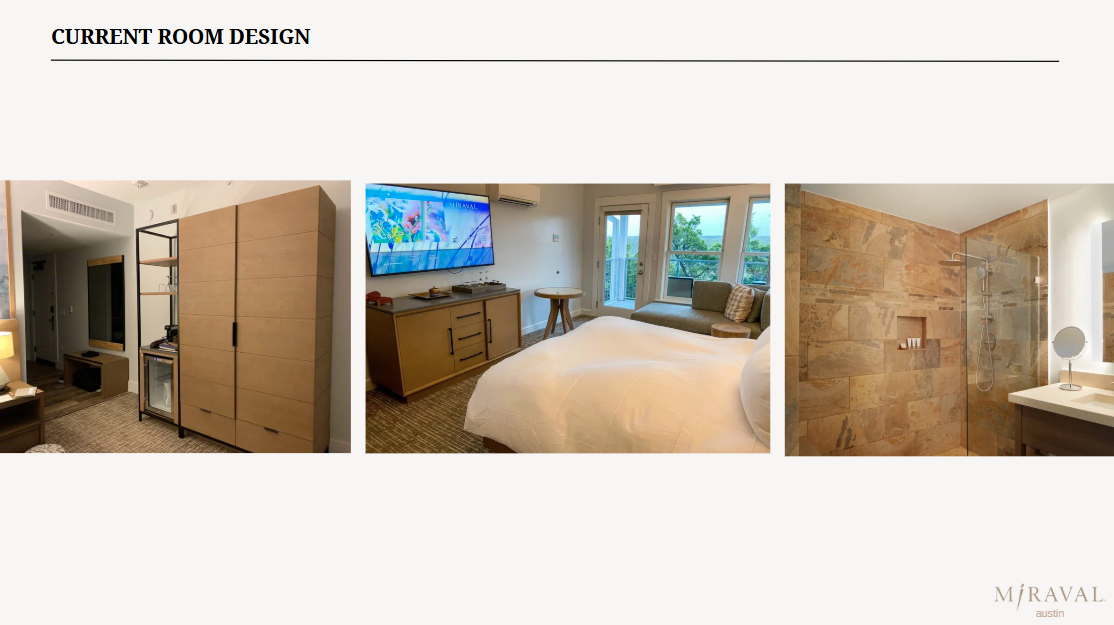
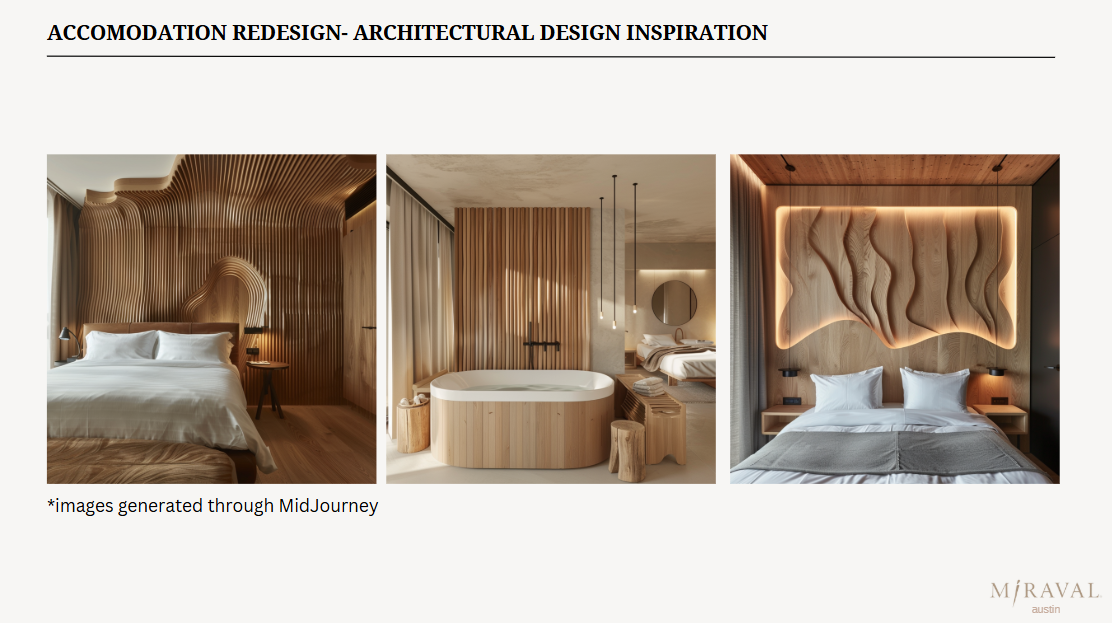
Primary research showed that luxurious rooms were a top factor in hotel selection, yet former Miraval guests felt accommodations did not match the premium price. Secondary research highlighted biophilic design as a growing resort trend proven to enhance guest experience. Upgrading rooms with innovative, biophilic elements aimed to attract new customers while improving guest well-being and satisfaction.
Miraval App Integration -
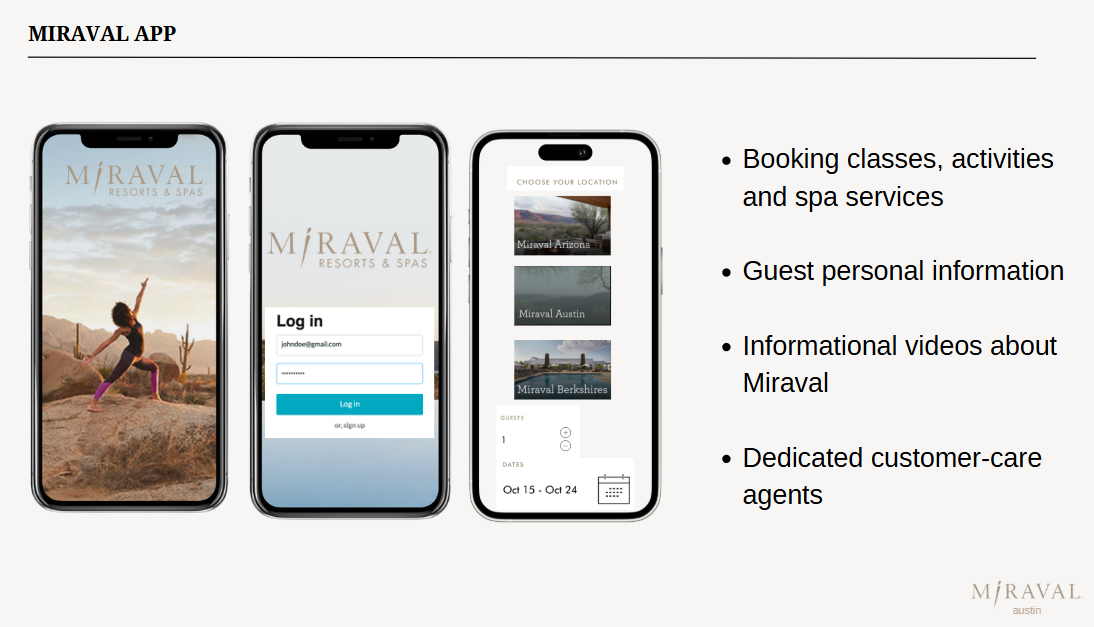
Primary research showed that over 80% of respondents are more likely to stay at a resort with a dedicated app for booking and staff communication. Supported by industry findings that “technology is the next spa and wellness frontier” (Lumina Wellbeing, 2023), the proposed app serves as a centralized platform for reservations, class and spa bookings, and loyalty tracking.
Medical Wellness Integration -
Introduces medical-grade assessments and care sessions, aligning with competitors like Canyon Ranch. With the global medical spa market projected to grow from $19.05B in 2023 to $78.42B by 2033 (Precedence Research, 2024), this expansion positions the resort within a rapidly growing sector.
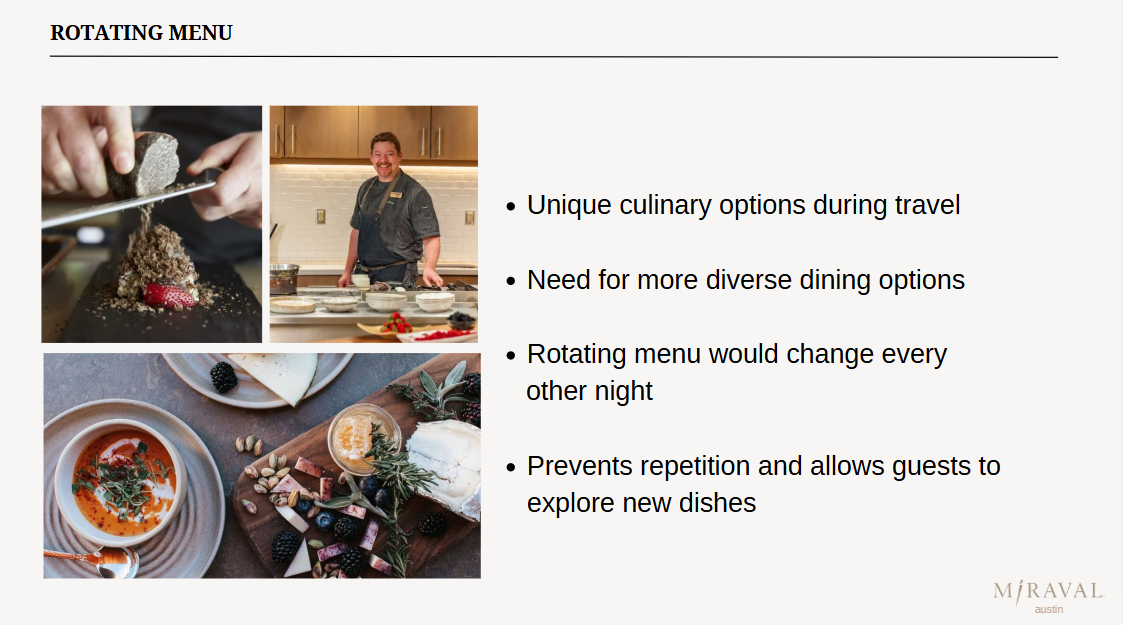
Rotating Menu -
Implementing a rotating menu that introduces 1-2 new dishes each night can significantly enhance guest satisfaction by providing variety and excitement. Research shows that "Introducing new dishes keeps the menu fresh and gives customers more reasons to return" (Reinoso, 2024).